The Comics Code Authority was a publisher-run censorship board that comic companies created in 1954 to self-police content after Senate hearings raised the threat of government regulation, and it stuck around until DC Comics and Archie Comics dropped its seal in January 2011. The code began as a direct response to Senator Estes Kefauver's 1954 Senate Judiciary Committee hearings into whether crime and horror comics caused juvenile delinquency.
Why did publishers create their own censorship board? Comic sales were sliding under public pressure, and the industry chose self-regulation over a Senate-recommended alternative. Rather than risk federal censorship, publishers formed the Comics Magazine Association of America and had it issue a seal of approval — a stamp so influential that many distributors simply refused to carry comics that didn't carry it.
That gatekeeping power is what made the Code effective without any legal backing at all. No law required a comic to carry the seal. But newsstand wholesalers and retailers, wary of the same public pressure that triggered the Senate hearings, treated the stamp as a purchasing signal — an unapproved book risked being turned away before it ever reached a spinner rack, regardless of what was actually inside it.
The Kefauver hearings weren't a footnote — they're preserved as part of the official record. The Senate Judiciary Committee's own interim report put the stakes bluntly:
This country cannot afford the calculated risk involved in feeding its children, through comic books, a concentrated diet of crime, horror, and violence.
That line comes from the committee's interim report, per the U.S. Capitol Visitor Center's archived copy of the original 1954 code and the committee's findings. That government archive is also where the actual 41-provision 1954 document survives today, filed as a physical artifact of the period.
What could the code actually block?
The original 1954 rules were broad by design. They restricted depictions of crime and horror, banned scantily clad or sexualized imagery, limited violence framed as desensitizing to children, and barred disrespect toward government and parental authority — even slang was discouraged. Comics only earned the seal if the Authority judged them suitable for the youngest readers in the room, not just the intended audience.
Genre words were policed as closely as content. The 1954 code went as far as banning the words horror and terror from comic titles outright, and it prohibited any depiction of drug use — even stories that framed drugs as dangerous or showed the consequences of addiction. A cautionary tale about drug abuse was treated the same as a story glamorizing it: neither could pass review.
How did the rules change over the decades?
The code wasn't static. It bent first in 1971, after Marvel published a Spider-Man storyline about drug abuse without Code approval because the Authority had refused to sign off on the subject at all. The backlash pushed the Comics Magazine Association of America to revise the code that February, loosening restrictions on crime stories, lifting the outright ban on horror content, and adding rules for how drug use could be shown responsibly instead of banning the topic outright.
A second overhaul followed in 1989, restructured into a shorter set of general principles paired with separate editorial guidelines — a response, in part, to DC Comics reportedly threatening to abandon the seal altogether if the rules didn't modernize. Both revisions moved in the same direction: fewer blanket bans, more editorial judgment left to publishers themselves.
Why did Marvel walk away first?
Marvel left the Comics Code Authority in 2001, building its own in-house rating system instead of continuing to submit books for outside review. By then the direct market — comics sold straight to specialty shops rather than through newsstand wholesalers — had already undercut the Code's original leverage. The seal had only mattered because distributors wouldn't stock unsealed comics; once publishers could reach shops without that gatekeeper, the incentive to seek approval weakened for everyone.
When did the code actually end, and why?
DC Comics and Archie Comics were the last two publishers still submitting books for review, and both dropped the seal in January 2011, effectively ending the Code's era after nearly 57 years. As NPR reported at the time, the shift reflected an industry that had aged alongside its readers and outgrown a set of standards built for newsstand-era children's comics — while the direct market had already made the seal's original enforcement mechanism obsolete years earlier.
Does a version of it still shape comics today?
Not as a shared industry board. What replaced the Code wasn't a successor organization but individual publishers' own rating systems, starting with Marvel's in 2001 — each company deciding internally how to label content rather than submitting to a joint outside authority the way the whole industry once did. The seal itself, once required to get a comic onto newsstand racks, is now a piece of publishing history rather than a live gatekeeper.
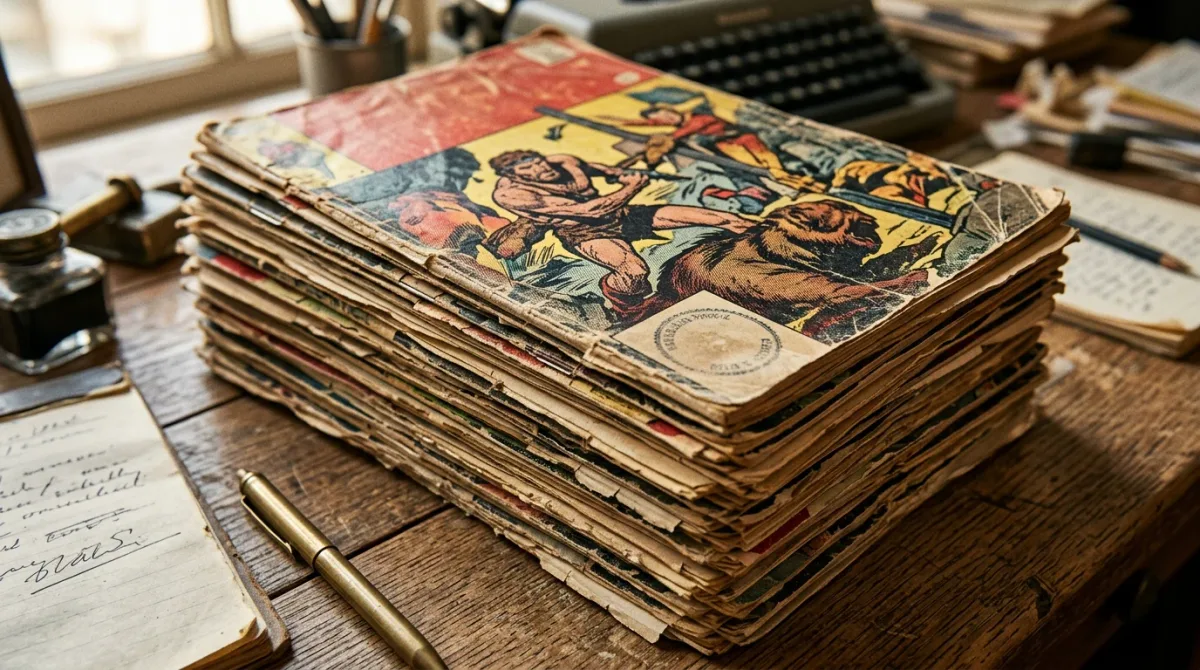
That history is still visible on the page for anyone paging through older back issues. A small stamp reading Approved by the Comics Code Authority, usually boxed in the upper corner of a cover, is one of the fastest ways to place roughly when a given comic was printed — present from the mid-1950s through the 2000s at DC and Archie, absent from Marvel's output after 2001, and gone from all three by 2011. It's a small detail, but it's a direct trace of a Senate hearing that never actually passed a law.
For a related culture perspective, read What Was the Comics Code Authority, and Why Did It End?.