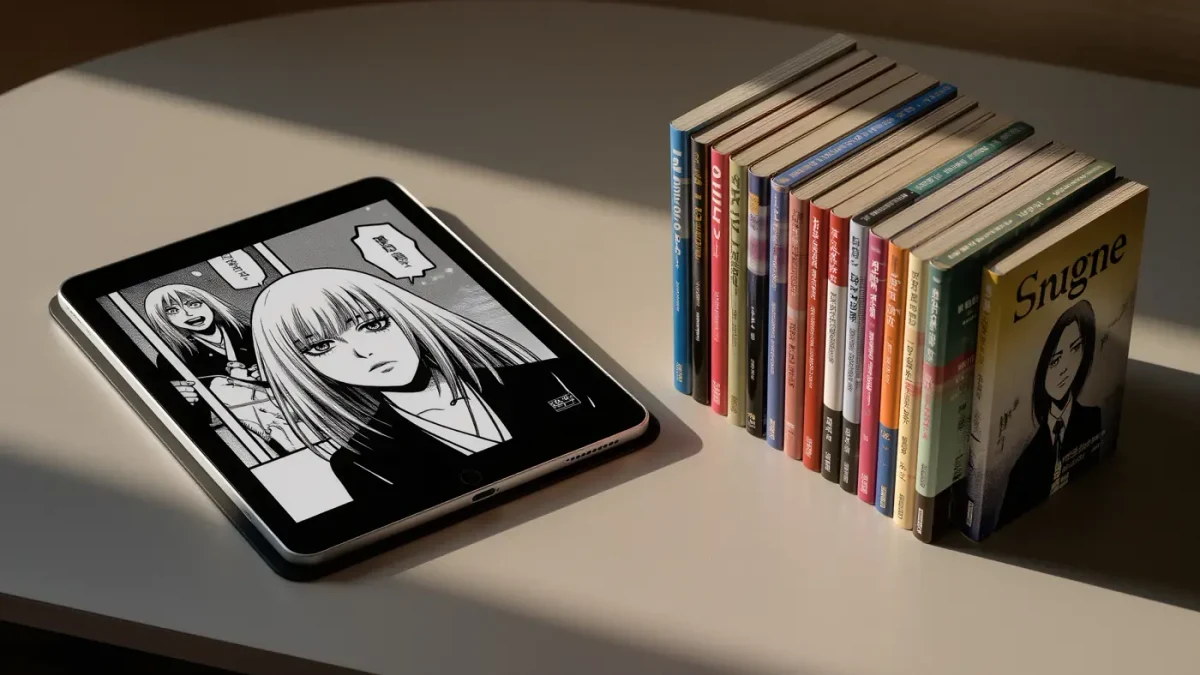
The best one-sitting manga right now are short standalone works from a handful of English-language publishers: The Way of the Househusband fans aside, start with The Walking Man (Jiro Taniguchi, English edition by Ponent Mon/Fanfare) and My Lesbian Experience with Loneliness (Kabi Nagata, Seven Seas, 2017) — the former is a nearly wordless walk through Japanese suburbs, the latter a 100-plus-page autobiographical debut that Kabi's publisher credits with launching a whole line of memoir sequels. Both are single volumes. Both are done in under two hours. That is the entire list's promise: no volume twos, no cliffhangers, no waiting for translation schedules.
This guide is built from documented edition data — volume counts, original publication years, and current English publishers — so you can verify every commitment claim before you buy. It publishes information, not collectible-value advice.
What counts as "standalone" on this list?
One story, complete, in one sitting — which in practice means three shapes: true one-volume works, short works collected into a single omnibus, and two-volume stories short enough to read back-to-back in an evening. Solanin (Inio Asano) is two volumes in its original Japanese edition; Tekkonkinkreet (Taiyo Matsumoto) ran three volumes but is collected in a single English omnibus edition from Viz. The list flags which is which, because "finish in one sitting" should mean exactly that.
| Title | Creator | English publisher | Shape |
|---|---|---|---|
| The Walking Man | Jiro Taniguchi | Ponent Mon / Fanfare | One volume |
| A Zoo in Winter | Jiro Taniguchi | Ponent Mon / Fanfare | One volume |
| A Distant Neighborhood | Jiro Taniguchi | Ponent Mon / Fanfare | Two volumes, one evening |
| My Lesbian Experience with Loneliness | Kabi Nagata | Seven Seas | One volume (2017) |
| Blank Canvas | Kabi Nagata | Seven Seas | Two volumes |
| All My Darling Daughters | Fumi Yoshinaga | Viz | One volume |
| Solanin | Inio Asano | Viz | Two volumes |
| Tekkonkinkreet | Taiyo Matsumoto | Viz | Single omnibus |
| Uzumaki | Junji Ito | Viz | Single omnibus edition |
| In Clothes Called Fat | Moyoco Anno | Vertical | One volume |
Which one should you buy if you only buy one?
Solanin, if you want a novel-length emotional story; The Walking Man, if you want the comics equivalent of a quiet walk. Solanin follows two college graduates stalled between youth and adult life — Asano's most-cited one-story work, and the one most often recommended in publisher and retailer reading guides as a first literary manga. The Walking Man has almost no plot at all: a man walks, notices things, and the pages breathe. Per its English publisher's catalog description, it was created as a series of quiet observational episodes, later bound as one volume.
Are the Taniguchi books really readable in one sitting?
Yes — they are among the fastest page-turns in literary manga precisely because Taniguchi's pacing is spacious. A Zoo in Winter is a coming-of-age story about a boy assisting a manga artist in 1960s Tokyo. A Distant Neighborhood is the high-concept pick: a middle-aged man wakes up in his own childhood — two slim volumes, finished in an evening. Taniguchi is the safest recommendation on this list for readers who claim they don't read manga.
What about the memoirs?
Kabi Nagata's My Lesbian Experience with Loneliness arrived in English from Seven Seas in 2017 and became one of the most widely reviewed autobiographical manga of the decade — a blunt account of depression, work, and first intimacy, drawn in a deceptively light style. Its follow-ups, collected in English as My Solo Exchange Diary and later the two-volume Blank Canvas (2020), continue the same life. Start with the original; it is complete on its own.
Is Uzumaki really a one-sitting book?
In its omnibus form, yes — with a stamina warning. Junji Ito's spiral-horror classic originally ran as three volumes; the single-volume hardcover omnibus edition published by Viz collects the complete story in one book. It is the longest entry here and the only horror one. Block out a stormy evening.
Spoilers below this line.
Endings, stated as vaguely as possible: Solanin's final act hinges on a band's one true performance; A Distant Neighborhood resolves whether the protagonist can change the past; Uzumaki ends the only way Ito endings end. Nothing on this list depends on sequel knowledge, because none of them have sequels you need.
Why there are no shonen giants here
Because the promise is one sitting. Long-running series — even brilliant ones — are a different purchase category: shelf commitments, weekly chapter habits, volumes arriving across years. The ten books above are the opposite of that. As of the publishers' 2025 catalogs, every one remains available in English in the listed shape, and several, like Solanin and the Uzumaki omnibus, have been reprinted repeatedly to keep pace with demand.