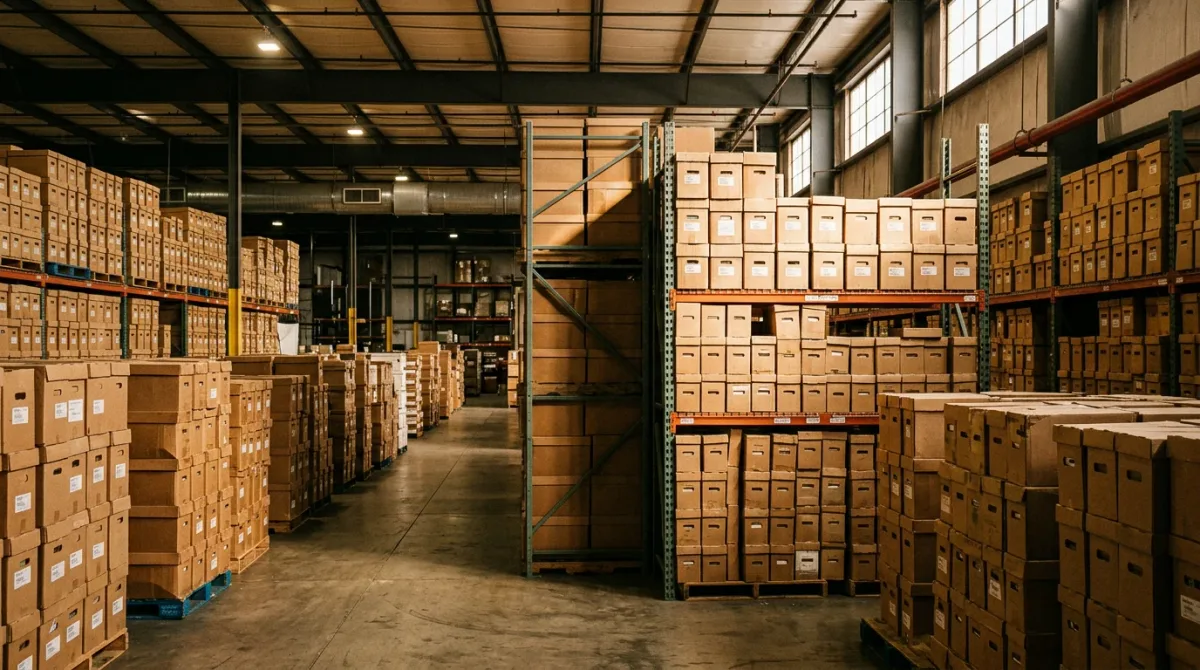
Comic book distribution runs on consignment: a publisher ships its books to a distributor, but keeps legal ownership of them until a comic shop actually buys copies. That single detail is what turned Diamond Comic Distributors' Chapter 11 bankruptcy into a legal standoff over roughly 8 million comics and pieces of memorabilia sitting in a Mississippi warehouse, according to Diamond's own bankruptcy filing and reporting from NPR.
Diamond filed for Chapter 11 protection on January 14, 2025, in the U.S. Bankruptcy Court for the District of Maryland, where the company is based in Hunt Valley. In the filing announcement, company president Chuck Parker called Diamond "a linchpin of the comic book industry for over four decades" and said the goal was to keep supplying retailers while the company restructured, per the announcement carried on BusinessWire. Diamond, founded in 1982, had for years been the dominant distributor moving comics from publishers to the specialty shops that make up what the industry calls the direct market.
Why does a distributor need a bankruptcy loan just to keep shipping comics?
Bankruptcy doesn't stop the bills. Diamond secured a $41 million debtor-in-possession, or DIP, loan from JPMorgan Chase specifically so it could keep paying vendors and shipping product to shops while the case played out, the company said in a separate statement announcing court approval of that financing. Parker said in that release that the court-approved funding was "a critical step for the company, ensuring we can pay our vendors and provide product to retailers." DIP financing is standard in Chapter 11 cases — it lets a company keep operating instead of shutting down immediately, on the theory that a business worth more running than liquidated should get the chance to sell itself in one piece.
What was actually being sold, and for how much?
The plan, laid out in Diamond's initial filing, paired the bankruptcy with a sale process: a $39 million stalking-horse bid from Universal Distribution for Alliance Game Distributors, Diamond's game-and-hobby arm, plus a non-binding letter of intent for Universal to acquire Diamond UK. Universal chief executive Angelo Exarhakos said at the time that his company was looking to bring the Alliance and Diamond UK teams "a stronger balance sheet." By spring, the sale had widened: an April court filing set an April 7 hearing in the same Maryland court to approve a sale covering Diamond Comic Distributors' core distribution business, Alliance, Diamond Book Distributors, Diamond Select Toys & Collectibles, and Collectible Grading Authority together, with Diamond UK carved out. Chief restructuring officer Robert Gorin said the company was working to minimize "disruption to publishers, retailers, our employees, and comic and games fans everywhere," though that release did not name a winning bidder or a final price.
So why are publishers still fighting over a warehouse full of comics?
Because the sale ultimately brought in less than expected, leaving JPMorgan with roughly a $7 million shortfall on the loan it had extended against Diamond's assets — and the bank has looked to the roughly 600,000-square-foot Mississippi warehouse, and the comics and games sitting in it, to help close that gap, according to NPR's reporting. That's where consignment turns from an accounting detail into a courtroom fight. Publishers and game makers who shipped stock to Diamond never sold it to Diamond outright; they own it until it sells through. Journalist Jonathan Randles summed up the resulting dispute to NPR: "The problem is, in a situation when a company like Diamond is in financial trouble, they file for bankruptcy. Then the question becomes, who owns the product?" Dozens of publishers, many of them small presses, have been unable to reach inventory worth real money to their businesses for more than a year while the courts sort that question out, per the NPR report.
Has a fight like this happened before?
Comics retail hasn't seen a distributor collapse of this scale before, but bankruptcy law has: NPR's reporting points to Sports Authority's 2016 bankruptcy as a comparable case, where vendors made similar consignment-ownership arguments over goods sitting in a bankrupt retailer's warehouses — and largely lost. That precedent doesn't decide the Diamond case, but it's the closest legal roadmap publishers and their lawyers have for how a judge might weigh consignment claims against a secured lender's claim on the same inventory.
What does this mean for readers and comic shops right now?
Individually, none of this changes what's on a shop's shelf this week — the industry has already been routing new releases through other distributors during Diamond's restructuring. What it does explain is why some publishers, especially smaller ones, have had spotty availability or delayed reprints over the past year and a half: their books, and the money tied up in them, have been sitting in a Mississippi warehouse waiting on a bankruptcy court rather than moving through the ordinary sell-through cycle. For readers who track why a favorite small-press series has been hard to find, the consignment dispute — not lack of demand — is the more likely explanation while the case remains unresolved.
For a related collecting perspective, read What CGC's 10-Point Comic Grading Scale Actually Means.