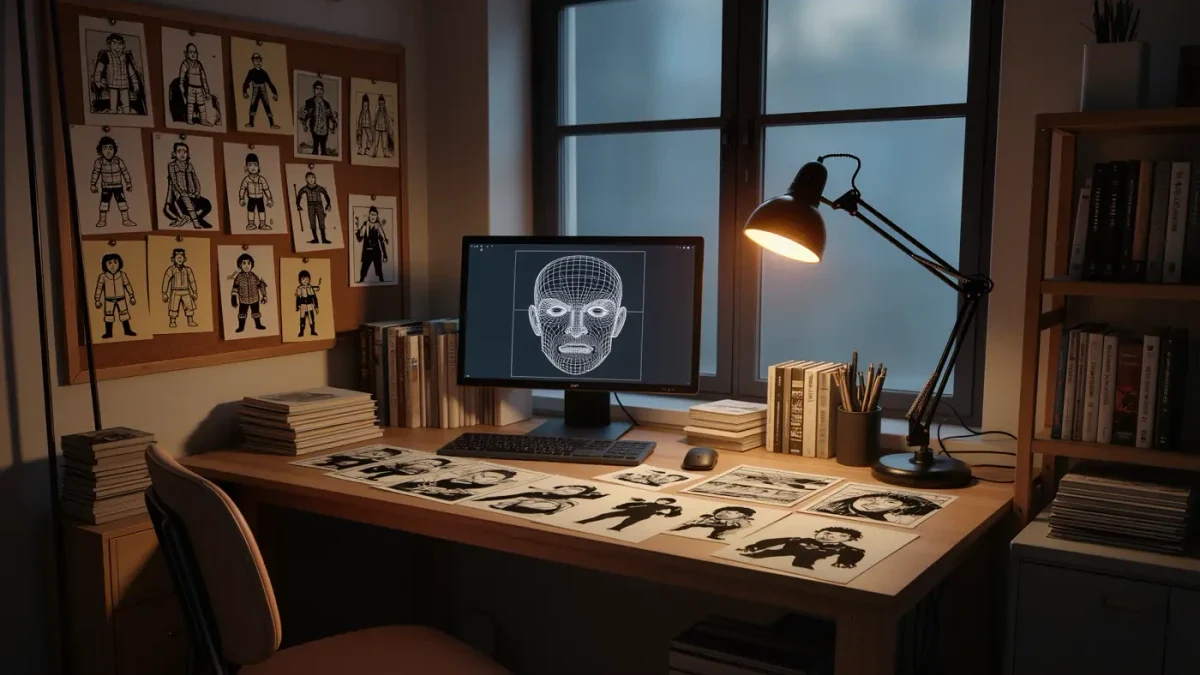
If you want the single best example of a game that thinks in comic panels, start with Framed (Loveshack Entertainment, 2012) — a mobile puzzle game where you reorder the panels of a silent comic strip to change what happens inside them. It is the purest fusion of the two media, because its mechanic is the page itself. Below it sits a thirty-year tradition of games borrowing ink lines, halftone shading, and panel grids, and this guide walks that history using only documented releases as of mid-2026.
Which game did comic style first?
The landmark is Comix Zone (Sega, 1995), a Genesis action game whose hero fights through the panels of a comic book — panel borders tear, characters leap between frames, and the level layout is literally a page. It was a commercial underperformer at release but became the reference point every later comic-styled game got compared to. Six years into retro revivals, its 2022-era re-releases in classic Sega collections remain the easiest legal way to play it.
What did cel-shading add?
XIII (2003), the comic-book-styled first-person shooter based on a Belgian graphic novel, brought the look into 3D: flat colors, bold outlines, and onomatopoeic word balloons that popped when headshots landed. It proved the style could carry a full-length action game, not just a curiosity. Cel-shading since became the standard technique — flat light, hard outlines — across indie and mid-budget games, even when the source material is anime or cartoons rather than print comics.
Which modern indies carry the noir-comic flag?
The strongest recent tradition is noir. Interrogation: You Will Be Deceived (2020) built its detective game around stark black-and-white comic portraits, and its developers published a detailed postmortem at Game Developer explaining how they combined film and comics influences for its interrogation-room aesthetic. Weekly indie roundups through 2025 and 2026 keep surfacing new noir detective games with pen-and-ink art direction — the style is cheap to produce at indie scale and instantly signals mood, which is why it keeps recurring.
Why do comic styles suit small teams?
Economics and readability. High-fidelity realism costs enormous asset budgets; bold ink lines, flat color, and limited animation read clearly at any resolution and age far better than mid-tier 3D. Panels also solve storytelling problems cheaply: a game can cut between panels like a comic instead of building animated cutscenes. That is the same logic comics themselves run on — maximum story per drawing — which is why the borrowing flows so naturally.
How do you find the good ones?
Search by technique, not by tag. Storefront tagging for "comic style" is inconsistent, so look for the telltales: ink outlines, halftone dots, panel-grid layouts, and word balloons in the screenshots. Then check the developer's stated influences — the best of these games cite specific comics traditions, like Interrogation's noir references, rather than just "comic book vibes." A team that names its influences usually understands the grammar, not just the costume.
What is the honest state of the style in 2026?
Healthy but scattered. There is no single publisher cornering comic-styled games; it remains a designer's choice made project by project, most often at indie scale. The landmarks are few enough to list — Comix Zone, XIII, Framed, Interrogation — and everything else is variation. That is good news for a reader: the canon is short, cheap to buy, and finishable in a month of evenings. Start with Framed for the idea, Comix Zone for the history, and let the new noir indies follow.