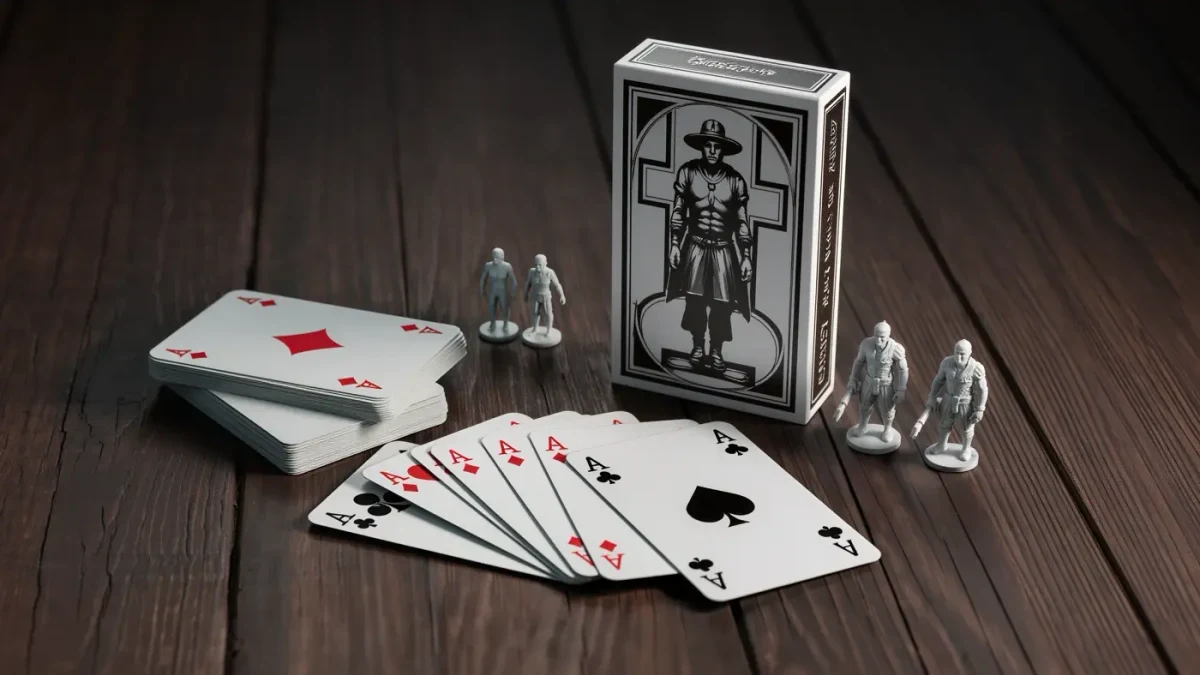
The best comics-to-tabletop crossover for most readers is Marvel Champions: The Card Game (Fantasy Flight Games, 2019) — a cooperative living card game that captures single-hero adventures without the collection churn of a trading card game. That is the honest answer up front; below is the wider map, because the crossover shelf is older, stranger, and more uneven than most fans assume. Everything here relies on documented publishing history and current availability as of early 2026.
When did comics and tabletop start crossing over?
Decades ago. Superhero skirmish and adventure board games date back to the 1980s licensed boom, but the modern crossover era began when hobby-board-game design matured in the 2010s. Cryptozoic's DC Comics Deck-Building Game (2012) put comic properties into the then-hot deck-building format, and Greater Than Games' Sentinels of the Multiverse (2011) did something more interesting: an original comics-styled superhero world built natively for cardboard, with expansion decks written like character arcs.
What happened to the original superhero tabletop universe?
A cautionary chapter. Greater Than Games, the publisher behind Sentinels of the Multiverse and the Sentinel Comics RPG, shut down in 2025, with reporting by EN World citing tariff pressure among the causes. The lesson for buyers: original comics-styled tabletop lines are vulnerable in ways big licensed Marvel and DC products are not. If a Sentinels product is on your want list, check current availability before planning around expansions.
Which licensed games are worth buying first?
Three tiers, by what you want from a game night.
- Marvel Champions: The Card Game (Fantasy Flight Games, 2019) — cooperative, one hero per player, expandable but complete in the core box. The default recommendation.
- DC Comics Deck-Building Game (Cryptozoic, 2012) — competitive, fast to teach, cheap to try; the format has aged but the price has not.
- Comic-adapter board games of prose and indie comics — adaptations of titles like Locke & Key and The Walking Dead have run across multiple publishers; treat each on its own design merits, not the license.
Do comic crossovers work as entry games for new players?
Some do. Licensed themes lower the teaching barrier — everyone at the table already knows what a Batman or a Magneto is — but the rules complexity still varies wildly, from light family fillers to multi-hour campaign boxes. Read the playtime and player count on the box before buying for a mixed group. Marvel Champions succeeds partly because a first scenario teaches in under an hour while the full system runs much deeper.
How do you track this scene without drowning?
Follow the publishers, not the licenses. Fantasy Flight, Cryptozoic, CMON, and Lookout each announce crossovers on their own product pages, and hobby roundups at BoardGameGeek and specialist outlets catalog upcoming comic-themed releases each fall. Per ComicBook.com's late-2025 preview coverage, 2026's most-anticipated tabletop lists already include several game-universe adaptations crossing back onto the table — evidence that traffic now flows both ways, from consoles and comics into cardboard.
Buy the design first, the logo second. The best crossovers — Champions chief among them — would be good games with any theme; the worst are licenses with rules stapled on. That filter has not changed since 2012, and it will still hold next convention season.