Comics based on video games are a real, trackable corner of publishing, not a novelty rack — and the honest starting point is The Last of Us: American Dreams (Dark Horse, 2013), the eight-issue Ellie prequel by Faith Erin Hicks and Neil Druckmann, because it is complete, self-contained, and written to be read with no controller in sight. It is also the template for what the best game comics do: they expand a world instead of retelling a cutscene. This guide maps the territory — what started when, which runs finished cleanly, and what to pick up first — using only documented publishing history as of early 2026.
When did video game comics become a thing?
Earlier than most readers guess. Licensed game comics stretch back to the 1980s, but the modern era — publisher-backed, creator-driven adaptations — took shape in the 2000s. Marvel published Halo: Uprising by Brian Michael Bendis and Alex Maleev beginning in 2007, a four-issue bridge story set during the events of Halo 2. It proved a mainstream comics publisher could treat a shooter franchise as serious source material, and it opened the door for the licensed shelves you see today.
Which game franchises have the strongest comics backlist?
Three names dominate. The Witcher has a long-running line of miniseries and original graphic novels at Dark Horse and now elsewhere, anchored by Paul Tobin's House of Glass (2014). Assassin's Creed has published comics almost continuously since 2009 across several publishers, with Titan Comics handling a multi-part series in recent years. And Tomb Raider had a well-regarded 2014 Dark Horse relaunch written by Gail Simone that picked Lara up directly after the 2013 game reboot.
- The Last of Us: American Dreams (Dark Horse, 2013) — complete prequel, the easiest on-ramp.
- Tomb Raider (Dark Horse, 2014) — Gail Simone's post-reboot run, collected in affordable volumes.
- The Witcher: House of Glass (Dark Horse, 2014) — five issues, self-contained monster story.
What about League of Legends and esports-adjacent titles?
Riot Games took the most direct route: in 2018 the studio partnered with Marvel Comics to publish original League of Legends miniseries, starting with Ashe: Warmother in January 2019 and following with Lux the same year. Per Marvel's 2018 announcement, the line was conceived as canon-adjacent character studies rather than game tie-ins, which is exactly why they read well for non-players.
Are these canon, and does it matter?
Mostly canon-adjacent, and mostly it does not matter. American Dreams is treated as backstory consistent with the games; the Marvel–Riot series were developed with Riot's narrative team. If canon certainty is your priority, check the publisher's solicitation language for the word canon before buying — publishers state it when it applies. For everyone else, a complete story with a real creative team beats a canon label every time.
How should a new reader actually buy these?
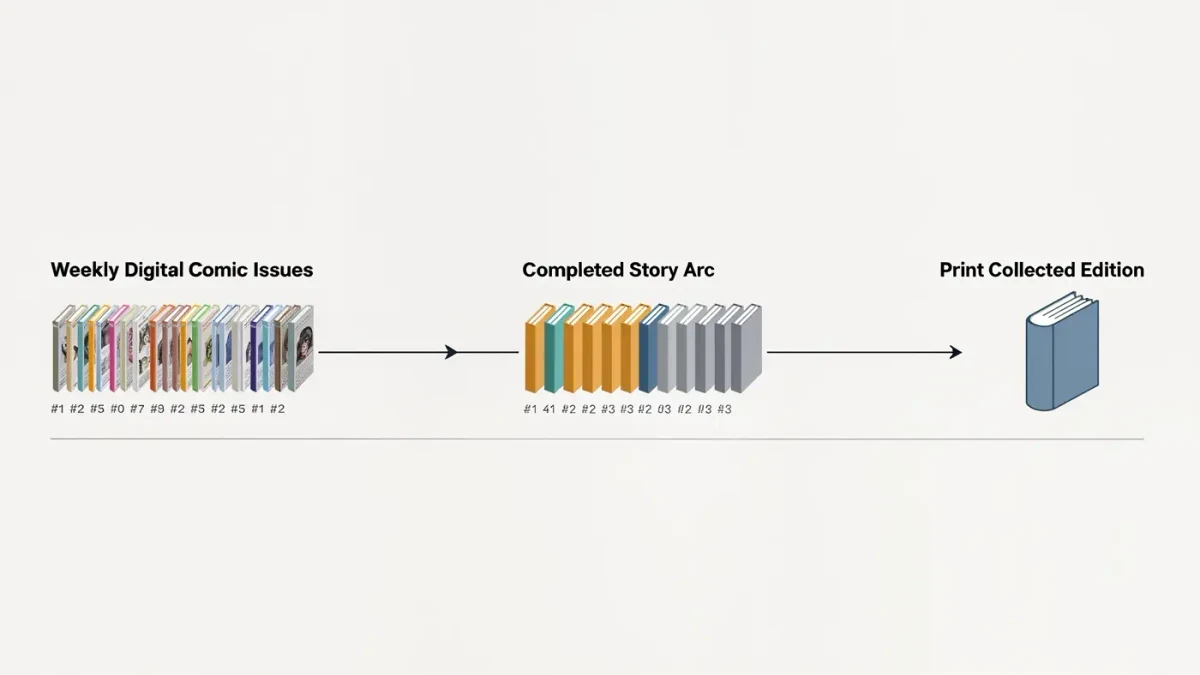
Buy collected editions, not single issues. Nearly every run listed above is available as a single trade paperback or hardcover — one volume, one purchase, the whole story. Start with American Dreams, add House of Glass if you want fantasy over post-apocalypse, and sample the Marvel–Riot miniseries if you would rather read about characters than mechanics. Check current print status with the publisher before ordering; licensed editions go out of print when licenses lapse, and reprints depend on the license, not demand.
What is the honest downside of game comics?
Licenses expire. Runs stop mid-thought, older volumes drift out of print, and quality varies more than in creator-owned books because the property, not the creator, is the product. That is why this map favors complete, collected, well-reviewed runs over long backlists. Read the finished stories first; chase the rest only if the game already lives in your head rent-free.