Buy an early access game now only if the version on sale today already gives you the experience you want, and the promised future content is a bonus rather than the reason you're paying. Wait it out when the feature pulling you in isn't in the build yet, or when the studio hasn't said when the game will be finished.
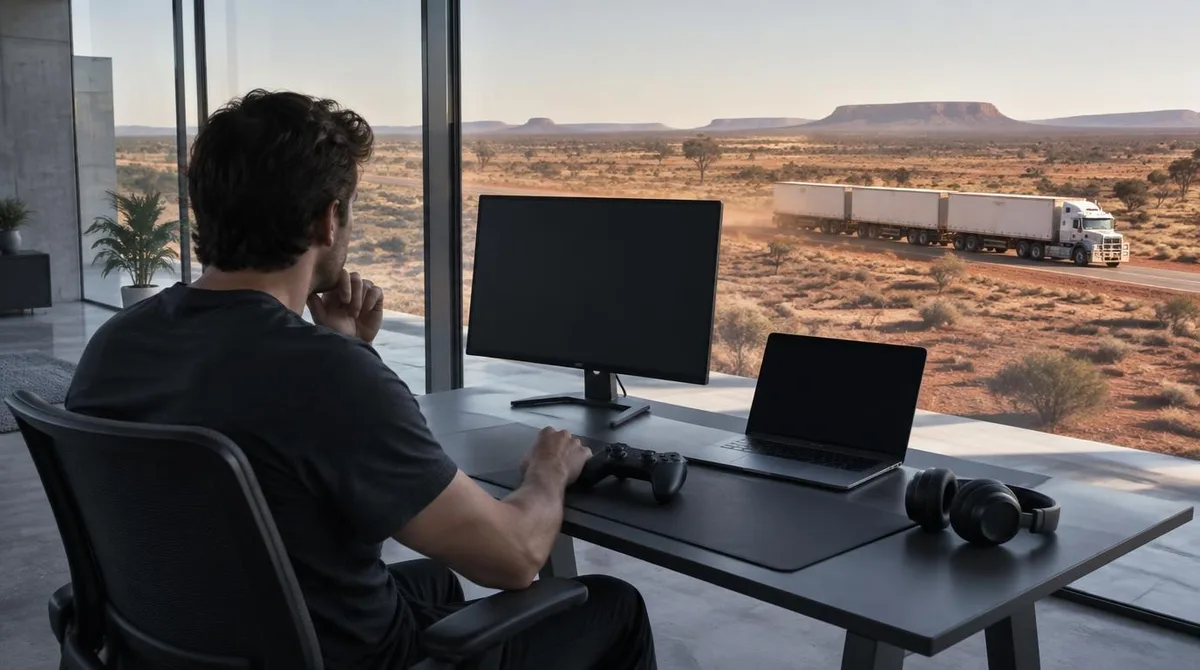
That's the whole test, and two November launches show both sides of it. DREADMOOR, a dark first-person fishing adventure from developer Dream Dock, shipped its complete first-region storyline on day one, per reporting at DLCompare. Truck World: Australia launched the same week with its headline feature — drivable road trains — still missing, with no date attached. One is a functioning game you can finish. The other is a promise with a demo attached.
What does Early Access actually mean in 2026?
Early Access means you pay to play a game that isn't finished. Steam started the program in 2013 as a way for small studios to fund development mid-build and gather player feedback before a 1.0 launch. The label covers everything from a nearly complete soft launch to a long-term open development project, which is exactly why it confuses people.
It's also getting crowded. According to GamesIndustry.biz, SteamDB counted 2,924 Early Access launches on Steam in 2026 as of mid-October — up 18% from 2025 and up 60% from 2020. Early Access titles made up 13.7% of all Steam releases in 2026, up from 10.4% in 2024. More games are asking you to buy unfinished, and the quality range keeps widening.
The catch most players miss: finishing a game often doesn't pay off for the studio, so the finished version may not get much marketing push. GameDiscoverCo's numbers, cited in the same GamesIndustry.biz report, found only 21% of Steam Early Access graduates earned more in their first 30 days after 1.0 than after their Early Access release. The polished, complete version you're waiting for can arrive quietly. Readers following this should also see Reprint Watch: How to Catch Out-of-Print Comics Coming Back.
Should you buy DREADMOOR now or wait?
Buy it now if the fishing-and-dread loop appeals, because the current build is a complete story, not a slice. The Early Access version ships the full storyline set in the first region of the flooded Submerged Lands, plus a range of fish species and mutations to find, according to the launch coverage at DLCompare. After the story, you can keep fishing, craft lures from mutant fish parts, salvage wrecks and upgrade your boat.
The money side matters too. DREADMOOR costs $19.99, with a 10% launch discount bringing it to $17.99 through November 23, 2026. Dream Dock expects Early Access to last six to twelve months, and the studio has confirmed the price will rise at full release. So waiting costs money here — the opposite of the usual assumption.
What's still coming: more regions and more story chapters, with no firm date for version 1.0. If the first region's worth of content satisfies you, the math favors buying in during the discount window. If you'd rather have the whole map, waiting is rational — you'll pay more later, but you'll know what you're getting.
Why is Truck World: Australia a wait-first case?
Wait, at least if road trains are the draw. The game launched in Early Access on November 5, 2026 on Xbox, the Microsoft Store and the Epic Games Store, published by HypeTrain Digital, per HappyGamer. It costs $29.99 / £24.24 / €29.99 / AU$44.95 — a real price for an unfinished game.
What's in the build now: a region inspired by South Australia's Eyre Peninsula, hands-on truck work like hitching trailers and connecting hoses, and a load-planning system that pays more for smart routes. What's not: road trains, the multi-trailer rigs that drew attention to the game's earliest videos. They're planned for a future update with no date given. A Steam release is planned for 2027.
The publisher says the game's demo, First Haul, passed 1.2 million downloads on the Xbox Store — a publisher claim, so treat it as such. But the practical advice from that reporting holds: if you never played the demo, play it first. It's the free way to find out whether the core loop hooks you before you pay for the rest later.
How do you judge an Early Access game before buying?
Run the same four checks on any Early Access page, and most decisions make themselves. The label tells you almost nothing on its own; the store page tells you almost everything.
- Read what's in the build, not the roadmap. DREADMOOR states plainly that the first region's story is complete. Truck World: Australia states road trains aren't in yet. A store page that's vague about current content is a warning sign.
- Check the timeline. Dream Dock says six to twelve months. HypeTrain gave no date for road trains and points Steam players to 2027. A concrete window is a commitment; a shrug is not.
- Check the price trajectory. Some studios charge less during Early Access and raise the price at 1.0 — DREADMOOR is confirmed to do this. Others hold or discount at launch. If the price will rise, waiting has a cost. If it won't, waiting is free.
- Ask whether you'd enjoy today's build with nothing more ever added. If yes, buying in is safe. If your answer depends on future updates, you're preordering a promise — and the same caution we apply to preorders applies here.
Developer expectations have risen too. Richard Svensson, CEO of Valheim studio Iron Gate, told GamesIndustry.biz that players expect about 20% less from an Early Access game than a full release — but they still expect a polished game. "They might be more forgiving when it comes to content, but they still expect a polished game," he said. A buggy, janky build is no longer excused by the label.
What this means for your wishlist
Early Access has earned real successes — GamesIndustry.biz points to Don't Starve, Baldur's Gate 3, Dead Cells and Phasmophobia as games that used the program well, and Valheim's studio says the model is the only reason the game reached its audience. But the same report quotes developers warning that big publishers now use the label as a marketing beat, which skews what players expect from small teams.
For you as a buyer, that cuts one way: judge the build in front of you. Wishlist the game, watch the updates, and buy when the current version alone justifies the price tag. If you're tracking release timing across formats, our guide to what "available now" really means on streaming covers the same instinct — release labels are marketing, and the details underneath them are the decision. We covered a connected angle in Streaming Releases: What 'Available Now' Really Means.
And when you do buy in early, you're not just a customer. The developers GamesIndustry.biz spoke with described Early Access as a collaborative process built on player feedback. A clear, honest review after a weekend with the game does more for the game's future than any wishlist. Buy in when the build earns it, wait when it doesn't, and say which one it was.