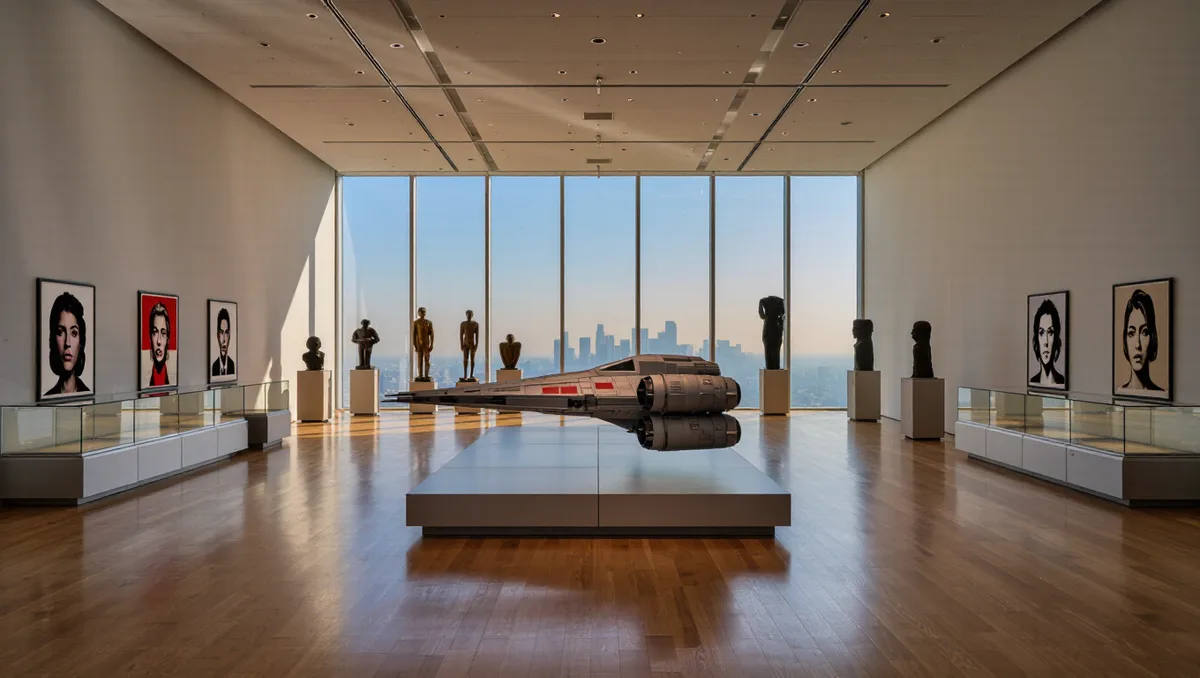
Pop culture now has a museum of its own. The Lucas Museum of Narrative Art opened in Los Angeles, the project George Lucas and his wife Mellody Hobson spent seventeen years — and, per La Voce di New York, a billion dollars of their own money — pushing past delays, rejected city bids and bureaucratic hurdles to build.
The short version of why that matters to comics and animation fans: the museum's collection pairs original Star Wars and Indiana Jones props with comic book art, then hangs Norman Rockwell and Frida Kahlo in the same building. Narrative art — pictures that tell stories — is being treated as museum-grade work, not a guilty pleasure. That argument has been running since the mid-20th century, when mass media started blurring the line between fine art and commercial illustration, and the Lucas Museum is its biggest institutional statement yet. This connects to our earlier piece, Where Did Comic Book Fandom Come From? A Short History.
This guide explains what the museum actually is, how it got built, and how to use it as a lens on the bigger shift: pop culture claiming wall space in the world's art institutions. If you follow the culture beat, this is the kind of story worth keeping in your back pocket — the arguments it settles are the same ones fans have been having for decades.
What exactly is the Lucas Museum of Narrative Art?
It is a museum built around visual storytelling. The founding idea, per the opening coverage, is to grant "museum-grade status" to narrative art — the category that covers comic pages, illustration, movie props and costumes, and traditional painting alike. The collection is deliberately eclectic: original props from Star Wars and Indiana Jones sit alongside comic book art and works by masters of traditional painting.
Lucas himself framed the mission during the opening. "You can't say this is art and this is not art. Art is in the eye of the beholder. Is it emotional to you? Then it's art," he said, adding that he has been "criticized up and down and sideways" for that view — and believes it wholeheartedly. "You get to decide what art is."
That visitor-decides philosophy is the museum's real thesis. The goal, per the reporting, goes beyond preserving nostalgia. It aims to be a living archive showing how stories shape daily life. Which is a very familiar argument to anyone who has ever defended a comic collection to a skeptical relative.
How did the museum finally get built?
Slowly, and not where it was first planned. The project spent seventeen years in the making, marked by complex hurdles — including initial rejections from San Francisco and Chicago before landing in Los Angeles. Lucas and Hobson funded the roughly billion-dollar build themselves, and the finished facility spans more than 100,000 square feet of exhibition space.
Los Angeles expects hundreds of thousands of visitors annually, and the coverage positions the museum as a landmark that puts the city alongside the major museum complexes of New York and Paris. For a project that started as a series of city council rejections, that is quite the landing.
Why does comic art belong in a fine art museum?
The honest answer is that the wall between the two categories has been crumbling for a long time. The museum's opening is described as the culmination of a movement that began in the mid-20th century, as mass media gradually blurred the line between traditional fine art and commercial illustration. Comic art, illustration and film design were always telling stories with images — the museum simply drops the apology.
If you want the deeper background on how comics earned cultural legitimacy, the story of the Comics Code Authority is the essential prequel: an entire industry spent decades proving its work was respectable enough to escape its own censor. And the formal grammar of comics — how panels, gutters and splash pages actually work — is the craft case for why sequential art deserves close reading. The Lucas Museum is essentially that argument, poured in concrete at a billion-dollar scale.
Is this part of a bigger trend?
Yes, and it is not staying in the United States. The same movement turning cinematic universes into museum exhibits is playing out globally. The Modern Art Museum in Shanghai recently debuted "Johnny Depp: The Edge," the American actor's first solo museum show in China, built from paintings, personal writings, video and immersive installations. Per the reporting, it shows how major contemporary institutions are using the emotional pull of cult figures to draw broader audiences into art galleries.
The pattern across both cases is the same: institutions that once guarded the line between high art and popular entertainment are now courting the popular side, because that is where the audiences are. Fandom's visual language — props, costumes, comic pages — turns out to be a reliable door into the gallery. It is a cousin of the shift that took cosplay from convention halls to the mainstream: the things fans loved first, culture institutions adopted second. For related coverage, see Your First Comic Convention: A Practical Survival Guide.
What should a first-time visitor actually do there?
The museum's own philosophy answers this one. Since Lucas insists the audience is the ultimate judge of art, there is no required art-history homework. The practical approach, based on what the collection holds:
- Start with whatever you already love. If Star Wars or Indiana Jones props are your entry point, that is a legitimate way in — the museum's whole premise is that emotional connection is the measure.
- Then cross the aisle. The collection deliberately pairs those props with Rockwell, Kahlo and comic art, so the building itself invites you to compare a movie costume with a painted illustration and ask what the difference is.
- Bring your own memory. The opening coverage's takeaway is that standing before a painting or a hero's costume, visitors are looking for a piece of their own memory that still speaks across the years. That is the intended experience, not a lucky accident.
No textbooks required. No degree required. The museum's founding argument is that you get to decide — and it built 100,000 square feet of exhibition space to let you practice.
What does this change for comics and animation fans?
Practically, it adds a permanent, high-profile institution that treats fan-favorite material as art worth preserving and studying. That does not settle every argument — Lucas notes he has been criticized for his view from every direction — but it gives the pro-comics side of the debate a very large building to point at. The next time someone dismisses narrative art as kids' stuff, there is now a billion-dollar answer in Los Angeles.