DC's 2026 collected editions are best tracked the boring, reliable way: through the publisher's own monthly solicitations, which list every trade paperback, hardcover, and omnibus roughly two to three months before it ships, with full contents and format details. As of February 2026, that pipeline — plus a pre-order through your local shop before the Final Order Cutoff — is how you guarantee the edition you want at the edition you want. This guide shows you how to read the listings, decode DC's format ladder, and avoid the classic collected-edition traps.
How does DC announce collected editions?
Through the same monthly solicitation cycle as its singles. Each listing names the contents by issue number, the page count, the trim size, the format, and the creators. DC also previews its premium program — the Absolute line, deluxe editions, and omnibuses — in publisher announcements and convention panels before items enter the catalog. Firm dates exist only once an item is solicited. Preview-stage announcements are signals of intent, and DC's premium editions do get resolicited and rescheduled; the solicitation is the moment a date becomes real.
Which DC format should you actually buy?
Match the format to the commitment, not the shelf photo:
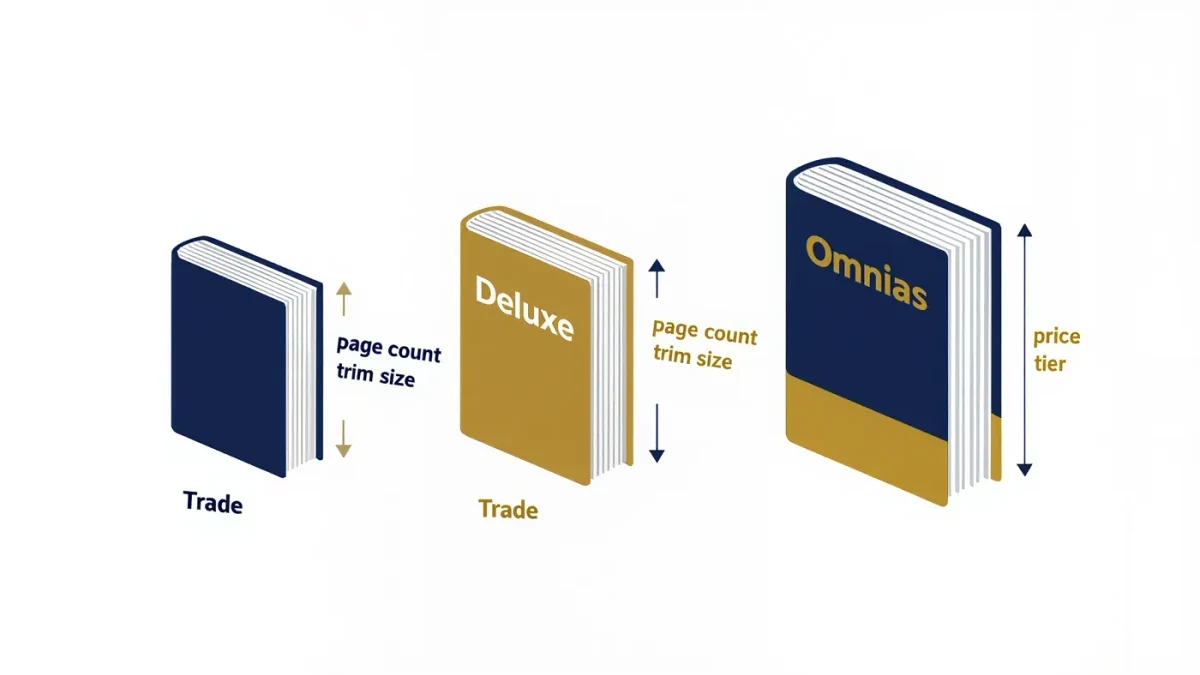
- Trade paperback — the standard paperback collecting one arc or roughly six issues. Cheapest entry, most likely to stay in print.
- Deluxe / Absolute — oversized hardcovers with larger trim and better paper. DC's Absolute line, which relaunched in 2024 with Absolute Batman, sits at the top of the premium ladder; the collectible hardcover program around it is where DC concentrates its anniversary and archival releases.
- Omnibus — the everything-in-one hardcover. Best value per page, worst to handle, and the most likely to go out of print and get expensive on the secondary market.
The decision rule: sample in trade, commit in deluxe or omnibus only after you know you'll reread it.
How far ahead can you plan 2026 buying?
Realistically, one quarter. Solicitations run about two to three months ahead, so your spring planning happens in winter. DC's premium and archival editions are often announced further out — sometimes a year — at retailer summits and conventions, but those early dates shift. A workable annual rhythm: skim solicitations monthly, note anything in your lanes, and set a budget line for the premium hardcovers you'd genuinely reread. Readers who plan this way spend less, not more, because the pre-order list forces a decision instead of a spree.
What are the classic collected-edition traps?
Four, and all avoidable with the solicitation in hand. The overlap: an omnibus that repackages trades you already own — check the contents line, which lists exact issue numbers. The abridgement: older collections that cut pages; DC's modern reprints usually restore them, and the solicitation will say. The reprint dressed as new: a new ISBN with identical contents and a new cover; the contents line catches this too. The out-of-print gamble: skipping a hardcover assuming a reprint — big DC hardcovers can wait years for second printings while the secondary market doubles. Pre-order the ones you truly want.
Do DC collected editions hold their value?
Sometimes, and nobody can promise which — this site doesn't appraise and won't speculate. The observable pattern: thick hardcovers of long-runs material tend to go out of print and command premiums; standard trades of evergreen titles get reprinted for years. Buy the edition you'll read. Anything else is a bet, and bets belong outside a reading budget.
What about library and digital options while you wait?
Public library systems stock DC's trades widely — often the same week as retail, and holds queues are free. Digital storefronts sell day-and-date with print and run frequent sales on backlist. Neither replaces the hardcover on your shelf, but both are legitimate ways to read first and buy only the editions that survive your reread test. The readers with the best shelves are the ones who let the library filter their purchases.
Quick checklist before you pre-order any DC collection
- Read the contents line — exact issues, any extras, any restored material.
- Compare against what you already own for overlap.
- Check the format and trim size so the spine matches your shelf plan.
- Pre-order through your shop before Final Order Cutoff, or note the street date if you're buying retail.
That's the whole system. DC's catalog is unusually generous with detail, and the solicitation does the detective work for you — you just have to read it before the cutoff, not after the sellout.
How do you build a DC shelf that ages well?
Pick a lane and stay in it. Readers whose shelves hold value — in usefulness, not resale — almost always collect by run or creator rather than by character: one creator's full run in a uniform format beats a scattered mix of trades, deluxes, and omnibuses that overlap and mismatch. Decide your format rule up front, say 'hardcovers only for complete runs, trades for sampling,' and let every pre-order pass or fail that rule. Trim size matters more than newcomers expect: DC's omnibuses and Absolutes tower over standard trades, so a shelf plan that mixes them randomly looks chaotic and wastes space. Group by format, then by run. A shelf built this way survives reprint announcements, relaunches, and new formats without requiring you to rebuy anything — the contents line stays the judge, and the judge already cleared your shelf.
What should you skip entirely in 2026?
Skip anything you can't name a reason for owning. Tie-in collections to events you didn't enjoy, deluxe upgrades of books you read once and never reopened, and 'complete collection' repackagings that duplicate trades you already have — the solicitation exposes all three. DC's catalog is deep enough that no reader can have it all, and the collectors who last are the ones who treat that as liberating rather than limiting. Every skip funds the Absolute you actually want.