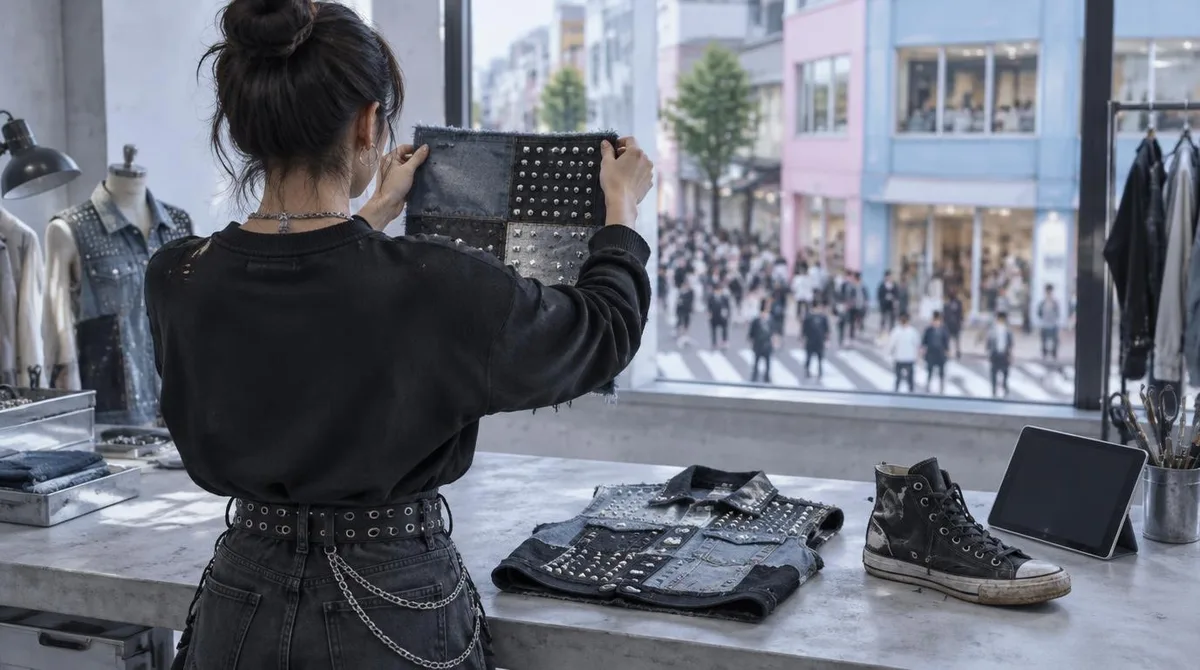
Subculture fashion is the clothing a smaller group inside a bigger culture builds to signal who belongs. The look starts as an inside language — patches, hair, silhouettes, shoes — and then, almost every time, the mainstream borrows it. That cycle is the whole story of how underground style keeps resurfacing in what you see at the mall.
Sociologists have been naming this pattern for decades. As early as 1950, Wikipedia's overview of subculture theory records, David Riesman separated a majority that passively accepted commercially provided styles from a subculture that actively sought a minority style and read it against the grain. The clothes were never just clothes. They were a statement about who you were and who you weren't.
So the short answer to why underground looks keep going mainstream: the style works. It carries meaning, it builds belonging, and meaning is exactly what big fashion brands want to sell. Below, we walk through how the pattern plays out, what it costs the communities that invent the looks, and what it means for how you build your own wardrobe. For related coverage, see Where Did Comic Book Fandom Come From? A Short History.
What actually makes a look 'subculture fashion'?
A subculture is a group within a larger culture that shares distinct values, practices, and styles while still living alongside the mainstream — skaters, cosplayers, metalheads, goths. Science Insights explains that style is the surface signal, but the deeper glue is shared knowledge, rituals, and especially language. Fashion works the same way as slang: insiders read it instantly, outsiders mostly don't.
That's why a jacket can mean so much. A battle vest covered in band patches isn't decoration. It's a résumé you can wear, a record of shows attended and years invested. The sociologist Sarah Thornton called this internal currency "subcultural capital" — the knowledge and objects that raise your status inside the group, even if the wider world shrugs.
It also helps to separate subculture from counterculture. Per Science Insights, a counterculture explicitly rejects the dominant culture's values, while a subculture simply occupies its own cultural niche. Punk started with a deliberate middle finger to polite society and softened over decades into something more like a subculture — complete with mall merchandise and mainstream festivals. The boundary depends on when you look and who's looking.
How did punk turn safety pins into a style revolution?
Punk, which per Practical Psychology took shape in the late 1970s in the UK and the US, used music and fashion to push back against things its members didn't accept. The look was deliberately abrasive: torn clothing, patches, spikes, dyed hair, and everyday objects worn as provocation. The point was to look unbuyable.
That lasted about as long as it takes a trend forecaster to catch a runway show. Punk's visual language — studs, tartan, distressed denim — is now a permanent fixture of mainstream retail. The irony is baked in: a style built to reject mass production became a mass-produced category of its own. Dick Hebdige's 1979 book Subculture: The Meaning of Style, summarized in Wikipedia's subculture entry, argued that subcultures are subversions of normalcy — and the story of punk fashion is what happens when normalcy subverts back.
Why does mainstream fashion keep borrowing from the underground?
Because the underground is where new ideas get tested first. Practical Psychology describes subcultures as "testing grounds" — places where creativity runs ahead of the market. Japan's Harajuku street style, which became famous around the late 1990s, mixed colors and silhouettes you couldn't find anywhere else, and that creativity flowed directly into mainstream fashion and art.
The borrowing follows a rough loop:
- A small group builds a style to signal belonging and difference.
- The style gets noticed — by photographers, musicians, or trend scouts.
- Designers and retailers translate it into sellable pieces.
- The original group moves on to something new, partly because the old look no longer marks insider status.
- The cycle restarts.
The hipster wave is the cleanest case study. Helpful Professor's list of subculture examples notes that hipster style — full beards, big glasses, skinny jeans, ironic clothing — was meant to be counter-cultural but was "quickly co-opted into the fashion mainstream of the 2010s." A look adopted to escape conformity became its own uniform. That's the loop closing, in real time.
What does the mainstream get wrong when it borrows?
What this means for the original community: the meaning gets stripped out. A patch on a battle vest says "I was at that show." The same patch printed on a fast-fashion jacket says nothing except "this looked cool in a mood board." The garment survives the trip; the message doesn't always.
There's also a status problem. Later scholars, as Science Insights reports, argued that Thornton's framework overlooked how class, race, and gender shape who accumulates subcultural capital in the first place. When a mainstream brand sells the look cheaply, the people who built it watch their insider currency get devalued — often without seeing much of the money.
Our analysis: the borrowing isn't going away, and it isn't purely villainous. Streetwear's rise — skate shoes and logo culture moving from sidewalk to luxury runway — followed the same loop and gave some originators genuine influence and income. The honest framing is a trade. Communities lose some exclusivity. Some gain reach, revenue, and a seat at the table. Not every group gets the same deal.
How can you wear these styles without faking the membership?
Practical steps, no gatekeeping lecture attached:
- Learn what the look meant before you wear it. A quick read on where a style came from changes how you put it together — and what you avoid.
- Buy the real thing when you can. A patch from a band you actually listen to beats a screen-printed imitation, and it usually costs less.
- Mix, don't costume. One or two subculture pieces woven into your own wardrobe reads as taste. A head-to-toe look you have no history with reads as a Halloween store.
- Support the originators. Small labels, scene vendors at conventions, and independent makers keep the next style alive while the big retailers mine the last one.
If you're building a look around fandom specifically, cosplay is the friendliest on-ramp — we've covered how cosplay went from convention hall to mainstream, and the same dynamic applies: craft and intent read louder than price tags. We covered a connected angle in How Did Cosplay Go From Convention Hall to Mainstream?.
Where does subculture fashion go next?
The internet has scrambled the old map. Science Insights notes that record shops, skate parks, and Discord servers all serve the same function — gathering spaces where shared style and shared language reinforce each other. When the gathering space is global and digital, styles can surface, spread, and get commercialized faster than ever, and a "subculture" can span continents overnight.
What the evidence establishes is the pattern, not a prediction: subcultures form around belonging, style is their flag, and the mainstream will keep buying the flag. What remains unknown is which community invents the next look — and whether, this time, the people who built it keep more than the credit.